
Guides
How the SBA and SBDC network help you test an idea before you build
SBA district offices, SCORE mentors and SBDC counselors give US founders free market data, research hours and a hard stress test before anything is built.
What to take away
- Three federally backed channels cost nothing to startan SBA district office, a SCORE mentor, and an SBDC counselor.
- A district office refers you onward. It does not run research on your idea.
- SCORE matches you with a working or retired operator who questions your assumptions by phone or video, free.
- An SBDC counselor is the closest thing to a free analysttrade area profiles, competitor counts, industry reports, and sometimes low-cost research hours through a host university.
- Every session ends in homework, not a verdict. The testing is still yours to run.
- Free counseling is the wrong tool when a lender, examiner or investor will scrutinize the number, or when your market is too small for national models.
What an SBA district office will and will not do
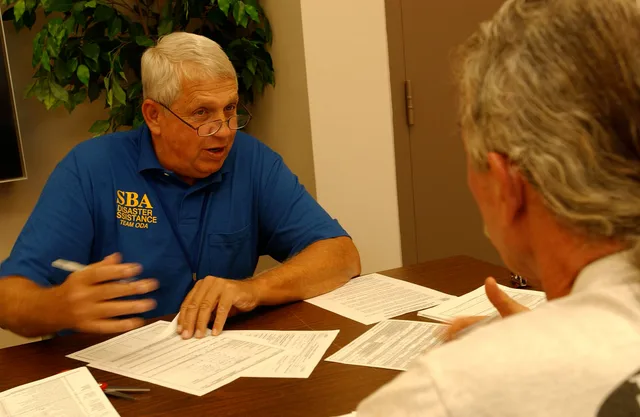
The Small Business Administration runs roughly 70 district offices covering every state and territory. For a founder with no product, the office is an entry point, not a service counter. Staff explain which programs fit your stage and hand you to a resource partner.
SBA district office: will vs. will not
Will do
- Explain programs
- Yes
- Refer to partners
- Yes
- Run market research
- No
- Custom demand study
- No
- Workshops on plans
- Yes
Will not do
- Explain programs
- No
- Refer to partners
- No
- Run market research
- Yes
- Custom demand study
- Yes
- Workshops on plans
- No
They will not run your market research. District staff are not analysts and have no budget line for a custom study on your idea. Ask for a demand estimate for a mobile dog grooming route in Colorado Springs and you will be redirected to the SBDC or to published data.
That redirect is the useful part. The SBA's counseling page lists SCORE, SBDCs, Women's Business Centers and Veterans Business Outreach Centers in one place, which is the fastest way to see free small business counseling and local mentoring before you spend anything.
District offices also run occasional workshops on business plans, EIN registration and Schedule C. An hour there is worth it if you have never filed a business tax return. The workshop will not validate your idea. It will keep you from structuring it badly.
One practical note: district boundaries follow state lines, but the partners they refer to often serve multi-county regions. In a metro that straddles a state line, such as Kansas City, ask which partner actually covers your address.
Sequencing matters more than any single session. A district office teaches you what exists. It does not teach you whether anyone will pay.
How SCORE mentoring works with no revenue and no prototype
SCORE is a nationwide network of volunteer mentors, most of them retired or semi-retired owners and executives. Mentoring is free. You request a mentor online or through a local chapter, and sessions run about an hour by phone, video or in person.
The value is not data. It is pattern recognition. A mentor who ran a distribution business for twenty years will ask you to name your first ten customers, and will not accept "restaurants" as an answer.
You can request an industry background. Selling to school districts? Ask for someone who sold to school districts. The matching is imperfect, but it beats cold networking on both speed and cost.
Mentors also test the parts of validation that are about you: whether you have the runway and the tolerance for rejection the test demands. Those are the same questions in a pre-quit checklist, worth filling out before your first session so you are not spending the hour on basics.
Expect assignments. Interview ten potential customers. Call three suppliers for pricing. Write down what would have to be true for the idea to work. Come back with answers rather than intentions and the second hour is worth three of the first.
Volunteers are not employees, and quality varies by chapter. If the first mentor is a poor fit, request another. There is no cost and no penalty for switching.
What an SBDC counselor brings: market data and research hours
The Small Business Development Center network is the research arm of this system. Centers are hosted at universities, community colleges and state economic development organizations, funded jointly by the SBA and the host. Counseling is free and confidential.
Go to an SBDC rather than SCORE for access. Counselors subscribe to industry report databases, demographic tools and competitor data that would cost you hundreds or thousands a year. They can pull a customer profile for a trade area, count competing establishments in a radius, and hand you an industry outlook.
Ask for three things by name: a trade area profile, a competitor list, and any industry report covering your NAICS code.
Many centers also sell low-cost research hours beyond the free counseling. A student or research assistant spends a set number of hours on one defined question, such as pricing across ten comparable businesses or a count of licensed providers in three counties.
The fee is modest and sometimes waived. Ask whether your center has the arrangement and what it charges.
Centers vary by state. The University of Texas at San Antonio hosts the South Texas network. New York centers sit inside regional colleges and local development organizations. Massachusetts runs its network through regional offices with strong export and manufacturing desks. The services are similar; the specialties are not.
The SBA keeps a directory of its partners, including the SBDC network, at local assistance. Start there if you do not know which center covers your county.
One caution. Trade area reports are built from national models and census data. They are reliable for broad demand and competitor counts, and weak on willingness to pay and niche behavior. Treat them as the floor of your evidence.
Booking the first session: what to bring and what to ask
Most founders waste the first appointment. They describe the idea for forty minutes and leave with encouragement. Arrive with a written question and a little prior work instead.
Bring a one-page description of the idea, the customer you think you serve, and the decision you are trying to make. "Should I sign a lease on a storefront" is a decision. "Is this a good idea" is not.
Bring what you already know. Five customer conversations? Bring the notes. None? Say so, and ask the counselor to help you design those conversations. That is a legitimate use of the hour.
Bring a rough budget and timeline. Counselors answer better when they know you have six months and a stated amount of cash rather than an open-ended commitment.
Run the appointment this way:
Running the first SBDC appointment
- Send one-pager and question two days ahead
- Open with decision and deadline
- Ask for trade area, competitor, industry pulls
- Ask what founders get wrong
- Agree on one deliverable and next date
Questions worth asking out loud:
- What published data exists on demand for this service in my trade area?
- How many businesses already do this within five miles, and how long have they operated?
- What do comparable businesses charge, and what does that imply about my margins?
- Which licenses, permits or registrations would I need before I could sell anything?
- Does this center offer paid research hours, and what would they cost?
- What would make you tell me not to proceed?
That last question is the most valuable one on the list. A counselor who has watched similar businesses fail will often name the failure mode in a sentence.
Find your nearest district office, SBDC or SCORE chapter through the SBA's find local assistance tool. Enter a ZIP code and it returns the offices covering it.
Turning counseling notes into a test you can run
Counseling produces inputs, not answers. A good session leaves you a list of unknowns and a rough sense of which matter most. Your job is to convert that into a test with a pass or fail threshold.
Meal prep test thresholds
- 3deposits required
- 10 of 15people naming same workaround
- 4,000households in target band
- 1%response rate equals 40 households
The SBA's guidance on market research and competitive analysis frames the work as understanding customers, industry and competition before you commit money. Read it before your second session and your questions get sharper.
Then pick the single assumption that, if false, ends the idea. For a meal prep service, that might be that working parents will pay a weekly premium for delivered dinners rather than cooking.
Design the cheapest test that could prove it false. Not a survey. A landing page with real prices and a deposit button, plus fifteen conversations with working parents recruited at school pickup or in a local Facebook group. Set the threshold in advance: three deposits, and ten of fifteen people naming the same current workaround.
Use the SBDC data to set the bar. If the trade area profile shows 4,000 households in your target income band within three miles, a 1 percent response rate is forty households, which tells you whether your sample is even reachable.
Write the test down before you run it. A written threshold is the difference between validation and collecting compliments. The structure in a market validation checklist works as a template: assumption, test, sample, threshold, decision.
Return to the same counselor with results. Both SCORE and SBDC support repeat sessions, and a counselor who has seen your numbers gives a very different hour than one hearing the idea for the first time.
If you are still choosing what to measure, the comparison in market validation tools sorts real data sources from opinion.
When counseling is the wrong tool
Free counseling has limits, and knowing them saves months. Three situations call for something else.
The first is a number someone else will scrutinize. Lenders, examiners and investors want methodology, sample sizes and sources. A trade area report will not survive that. Securities rules vary, so confirm any fundraising question with a licensed advisor and the applicable regulator.
The second is a small, specialized market. National models break down for a business selling to independent marine surveyors in the Pacific Northwest. There you need primary interviews, and paying a recruiter to find fifteen qualified subjects is faster than doing it yourself.
The third is a decision expensive enough that a wrong answer hurts. A five-year commercial lease, a major equipment purchase, or registering an entity before you have a customer. Entity choice and incorporation carry legal and tax consequences that vary by state; take those to a licensed attorney or accountant, not a counselor.
Paid research does not mean a big firm. A freelance market researcher on a fixed scope, a university center that takes contract work, or a specialist recruiter who assembles interview subjects all work. Scope it as a question, not a report.
There is a middle path too. Many SBDCs supervise a student research project for a fee, and some business schools run practicum courses where a team spends a semester on one local business. Ask your counselor whether the host university has that arrangement.
Be honest about your own capacity. Free counseling assumes you do the work between sessions. If you cannot commit several hours a week to interviews and testing, no session will validate the idea for you.
The problem discovery checklist is a fast way to check whether you have actually done the customer conversations you claim. If the real constraint is your own readiness rather than the market, the records described in founder readiness tools are a better use of a month than another appointment.
Common questions
Is SCORE mentoring really free?
Yes. Mentors are volunteers and one-to-one sessions cost nothing. You may be offered paid workshops, but the mentoring itself is free, and you can request a different mentor if the fit is wrong.
Can an SBDC do market research for my idea?
Counselors pull trade area profiles, competitor counts and industry reports from subscribed databases at no cost to you. Some centers also sell low-cost research hours staffed by students or research assistants.
What is the difference between an SBA district office and an SBDC?
The district office is an SBA staff office that explains programs and refers you onward. An SBDC is a separately hosted center, usually at a university, that does the counseling and data work.
Do I need an entity or EIN before I can get counseling?
No. SCORE and SBDC services are open to pre-product founders. An EIN and a state registration matter once you open a bank account or sign contracts. Entity choice is a legal and tax question for a licensed attorney or accountant in your state.
What if the free data contradicts what customers tell me?
Trust the customers, then check your sample. Published data describes averages across a large area. Your interviews describe the specific people who will actually buy.